Podcast 1/4h Neuro
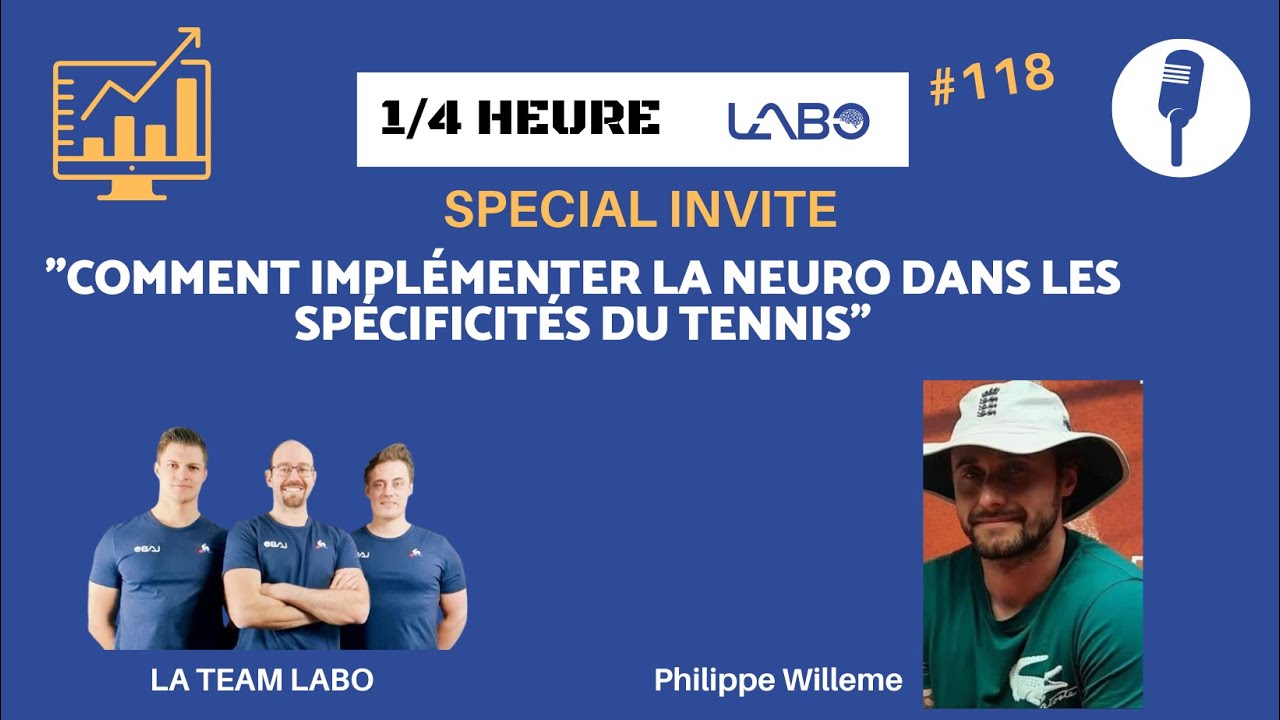
1/4 H Neuro #118 - Neuro and Tennis with Philippe Willeme
Discover how Philippe Willeme integrates neuro into tennis training, his successes, and his innovative approach for young athletes.
The RNP training space, free for life
Get access to RNP training, no strings attached.
Introduction to Neuro in Tennis
In this episode, we are pleased to welcome Philippe Willeme, a physical trainer and coach at the French Tennis Federation. Philippe shares his journey and how he began integrating neuro into the training of young tennis players.
Philippe Willeme's Journey
Philippe has a fascinating background, having also been a rugby player. He currently works with young athletes aged 6 to 16 at the Hauts-de-Seine training center. His introduction to neuro was motivated by a specific issue encountered with a young athlete.
An On-Court Challenge
A 13-year-old player was struggling with his left foot, which affected his on-court performance. After several attempts to resolve this issue through physical protocols without success, Philippe discovered neuro and began applying specific techniques.
The Results of Integrating Neuro
By incorporating eye training exercises, Philippe observed significant improvements in the young athlete's foot placement. The athlete gained confidence and commitment in his movements. Philippe emphasizes that while results are not always spectacular, every bit of progress counts.
Philippe's Training Methods
Philippe uses various training methods tailored to the needs of young athletes. He blends protocol exercises with on-court games to enhance learning.
Diverse Follow-Ups
He offers three types of follow-ups: group sessions, individual sessions, and private follow-ups. These approaches allow him to adapt to each young athlete's specific needs by incorporating vestibular, ocular, and proprioceptive elements.
Utilizing Play for Learning
Philippe emphasizes play as a learning method. Young athletes engage in fun exercises that improve their motor skills without realizing it. This makes sessions more enjoyable and effective.
Reintegration of Primitive Reflexes
A central question arises: should we always reintegrate primitive reflexes to improve sports performance? Philippe shares his thoughts on this topic.
Performance Comes First
He explains that the reintegration of these reflexes depends on the situation of the young athlete. If a player is performing well without reintegration, there is no need to force a change. The goal is to meet performance needs while respecting each individual's pace.
Evolution of Motor Skills in Youth
Philippe observes an evolution in motor skills among young athletes. The effects of COVID-19 have impacted their motor development, but he also notes a positive recovery over the past two years.
Returning to Motor Foundations
Today's youth display better motor skills, but Philippe points out that some still lack coordination and ease in basic movements. He works to strengthen these fundamental skills during his sessions.
Conclusion and Practical Tips
Philippe concludes by sharing a warm-up tip he regularly uses. These exercises help young athletes focus and better prepare for their sessions while addressing key aspects of motor skills.
To follow Philippe and his activities, find him on social media and during his engagements as a speaker. Thank you, Philippe, for this enriching exchange!
More episodes
The same take on movement, from three other angles of the 1/4h Neuro.
Podcast 1/4h Neuro
Decoding the Asymmetrical Tonic Neck Reflex - ATNR
Is your child getting tired while writing? Discover how an archaic reflex, the ATNR, can disrupt coordination and learning into adulthood.
Read the article Podcast 1/4h NeuroBrain Performance Is Not About Strength, But Balance
Exhausted but unable to disconnect? Discover how to restore your brain's balance to regain focus and mental energy.
Read the article Podcast 1/4h Neuro1/4h LabO #231 - Why Does Movement Think Before Us?
Discover how perception, not force, is the key to movement. Dive into the paradox of the first step and revolutionize your understanding of the body.
Read the articleReady to read the loop before the movement?
The RNP system is meant to be read, targeted and tested from your next assessment. Start with the member space, for free.