Podcast 1/4h Neuro
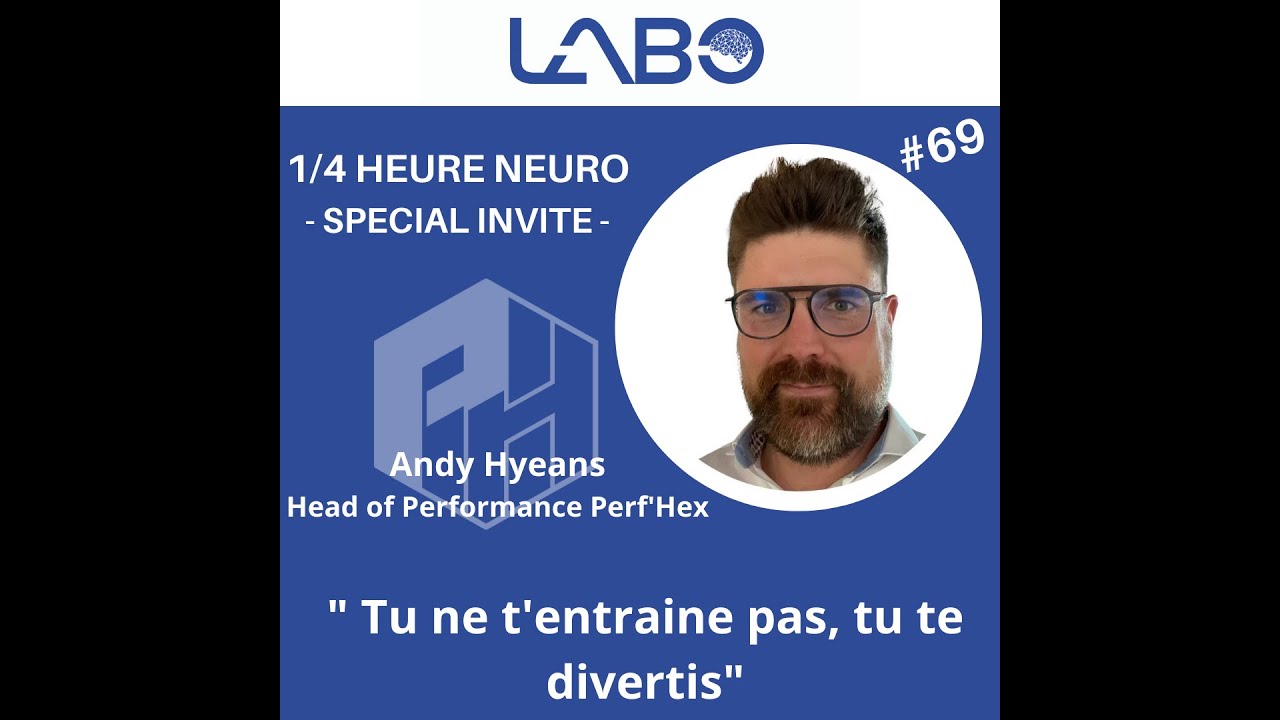
1/4 Hour Neuro #69: "You’re Not Training, You’re Entertaining" - Andy Hyeans
Discover Andy Hyeans' innovative approach to athletic talent development, which goes beyond traditional training.
The RNP training space, free for life
Get access to RNP training, no strings attached.
Andy Hyeans' Approach: Developing Talent Beyond Traditional Training
Andy Hyeans from Perfect offers a unique approach to sports training. Unlike traditional methods that rely on preset routines and relentless repetition, he focuses on the individual, their specific challenges, and the understanding of what talent truly means. His goal is to understand why some athletes appear to be more naturally gifted and to identify the mechanisms that allow talent to be developed in everyone, even those who have not made progress for years.
This reflection arose from observing athletes who, despite years of practice, could not improve their performance. Andy Hyeans sought to understand what differentiates "talented" athletes from others, not only in sports but also in areas like music or writing. This quest led him to an approach where it is no longer just about repeating a movement but reevaluating the sensory and cognitive information the brain uses to execute that movement.
Talent: A Complex Combination of Factors
The concept of talent, often seen as innate, is actually more complex. It stems from an ideal integration of skills throughout life, influenced by a favorable engagement context, genetic predispositions, and a supportive environment. Studying these factors helps us understand why some athletes stagnate and identifies levers to promote talent development.
Andy Hyeans emphasizes the importance of epigenetics, demonstrating that the environment and life experiences can modulate an individual's genetic potential. His experiments have shown that even athletes with atypical body types can develop specific qualities and achieve unexpected performances by acting on these levers. He cites the example of 5'3" basketball players who, after specific guidance, were able to reach the basket when they previously could not.
The Importance of Cognitive Abilities and Neuro-Performance
Beyond the physical aspect, high-level sports, particularly basketball, require highly developed cognitive skills. Quick decision-making, collaboration, and managing uncertainties demand optimal "neuro-performance." This involves excellent reception of visual, proprioceptive, vestibular, and tactile information.
Many elite athletes, even after years of intensive training, exhibit gaps in these areas. These "blind spots" are often unrecognized and limit their potential. Andy Hyeans proposes individualized reprogramming, which can last from 12 weeks to 9 months, to correct these deficits and lift performance limits.
Focusing on Causes Rather Than Results
The traditional training system concentrates on results, such as maximum power or speed, without always addressing the underlying causes of these performances. Andy Hyeans explains that this approach, while it may lead to initial improvements, creates a "glass ceiling" that prevents sustainable and optimal progress.
His work involves identifying the information the body has to perform a movement and how it integrates that information. For example, minimal instability can limit running or jumping without the athlete being aware of it. By correcting these information processing dysfunctions, one can observe spectacular performance gains, such as a 300% increase in stability.
This process requires a comprehensive history of the player, sometimes going back to early childhood, to understand their integration history. Andy Hyeans uses video to provide concrete feedback to athletes, showing them how their choices are influenced by sensory-motor limitations and how to correct them to unlock their full potential.
The Future of Performance: Beyond Preconceived Notions
Andy Hyeans is convinced that the sports world has been premature in declaring it is "at the extreme limit of human performance." He believes an entire area of research regarding the functioning of the nervous system has been overlooked. By focusing solely on physical Key Performance Indicators (KPIs), sports have ignored the importance of Key Human Indicators (KHIs), which are critical for human development.
His approach aims to reconcile the four pillars of performance (physical, tactical, technical, mental) by adding a deep understanding of the human being in its entirety. For Andy, the brain is the commander of the muscles, and it is by considering it that one can truly optimize performance. He expects many dogmas to crumble as new studies shed light on the importance of the nervous system and performance management.
More episodes
The same take on movement, from three other angles of the 1/4h Neuro.
Podcast 1/4h Neuro
Decoding the Asymmetrical Tonic Neck Reflex - ATNR
Is your child getting tired while writing? Discover how an archaic reflex, the ATNR, can disrupt coordination and learning into adulthood.
Read the article Podcast 1/4h NeuroBrain Performance Is Not About Strength, But Balance
Exhausted but unable to disconnect? Discover how to restore your brain's balance to regain focus and mental energy.
Read the article Podcast 1/4h Neuro1/4h LabO #231 - Why Does Movement Think Before Us?
Discover how perception, not force, is the key to movement. Dive into the paradox of the first step and revolutionize your understanding of the body.
Read the articleReady to read the loop before the movement?
The RNP system is meant to be read, targeted and tested from your next assessment. Start with the member space, for free.