Podcast 1/4h Neuro
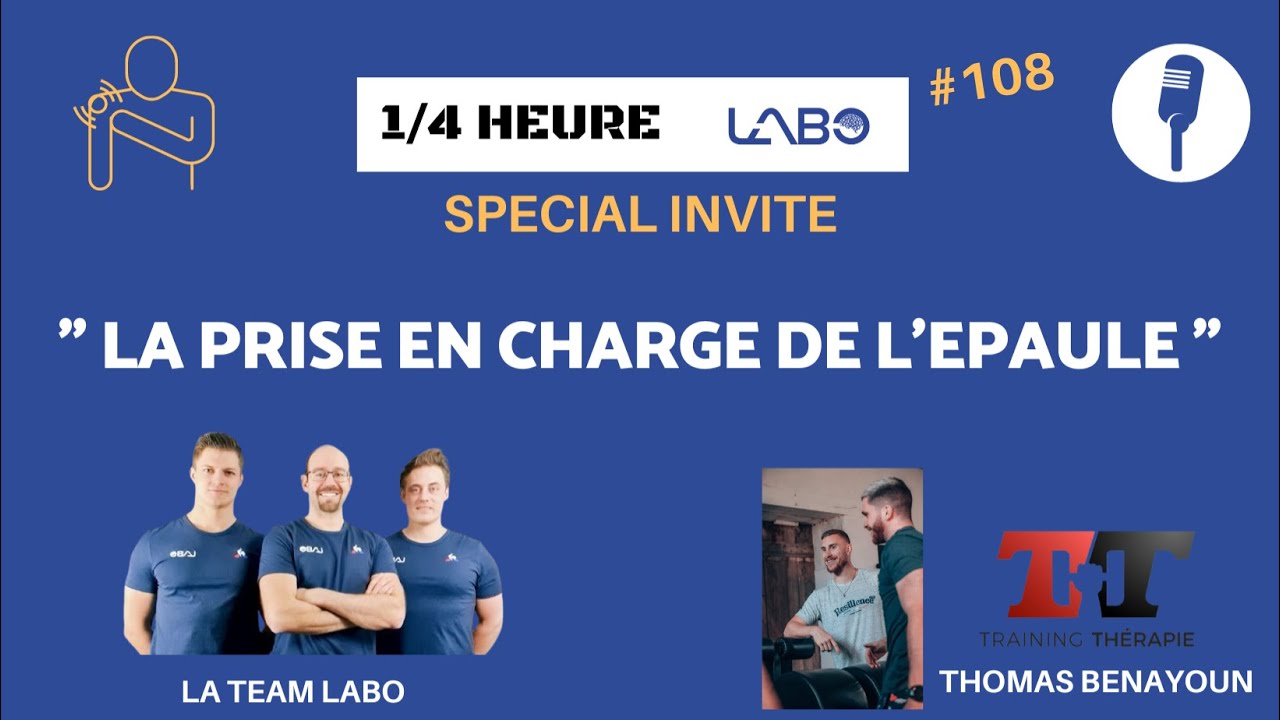
1/4 Hour LabO #108: "Shoulder Management" - Training Therapy
Discover innovative approaches to shoulder management with Thomas from Training Therapy, a specialized physiotherapist.
The RNP training space, free for life
Get access to RNP training, no strings attached.
Introduction
Welcome to this episode where we host Thomas from Training Therapy to discuss shoulder management. Thomas, a sports physiotherapist and physical trainer, shares his expertise and approaches with us.
Presentation of Thomas and Training Therapy
Thomas, 28 years old, is one of the co-founders of Training Therapy along with his partner Simon. This company specializes in remote support for athletes suffering from pain, particularly in disciplines like CrossFit, weightlifting, and bodybuilding.
The philosophy of Training Therapy is based on an active approach, where the patient is encouraged to move to facilitate the adaptation of their system. Thomas emphasizes the importance of active therapy, which focuses on the patient's movement, as opposed to manual therapy which, while useful, does not directly involve the patient's engagement.
The Challenges of Modern Physiotherapy
One of the main challenges Thomas refers to is the negative perception of physiotherapy by some patients. Many express frustration with care that seems insufficient, where sessions often limit themselves to passive treatments such as electrotherapy or quick massages.
Thomas also highlights the importance of a comprehensive assessment and clinical reasoning in patient management. Too often, physiotherapists may not devote the necessary time to each patient, which can compromise the quality of care.
Shoulder Management in CrossFit
CrossFit, as a sport combining various elements, places significant demands on the shoulder. Thomas explains that movements in this sport often put the shoulder through maximum ranges, which can lead to pain, especially when athletes are not adequately prepared.
Shoulder injuries in CrossFit are often due to overload pathologies, where tissues like the rotator cuff experience excessive strain. Thomas insists on the necessity to develop mobility and progressive strength to prevent these injuries.
Conclusion and Perspectives
In conclusion, Thomas emphasizes the importance of understanding the nervous system in pain management. The approach of Training Therapy seeks to combine knowledge in neuroscience with physiotherapeutic practice, thereby improving outcomes for patients.
To learn more, you can follow Training Therapy on social media and discover their innovative support methods. Thank you to Thomas for this enriching exchange!
More episodes
The same take on movement, from three other angles of the 1/4h Neuro.
Podcast 1/4h Neuro
Decoding the Asymmetrical Tonic Neck Reflex - ATNR
Is your child getting tired while writing? Discover how an archaic reflex, the ATNR, can disrupt coordination and learning into adulthood.
Read the article Podcast 1/4h NeuroBrain Performance Is Not About Strength, But Balance
Exhausted but unable to disconnect? Discover how to restore your brain's balance to regain focus and mental energy.
Read the article Podcast 1/4h Neuro1/4h LabO #231 - Why Does Movement Think Before Us?
Discover how perception, not force, is the key to movement. Dive into the paradox of the first step and revolutionize your understanding of the body.
Read the articleReady to read the loop before the movement?
The RNP system is meant to be read, targeted and tested from your next assessment. Start with the member space, for free.