Podcast 1/4h Neuro
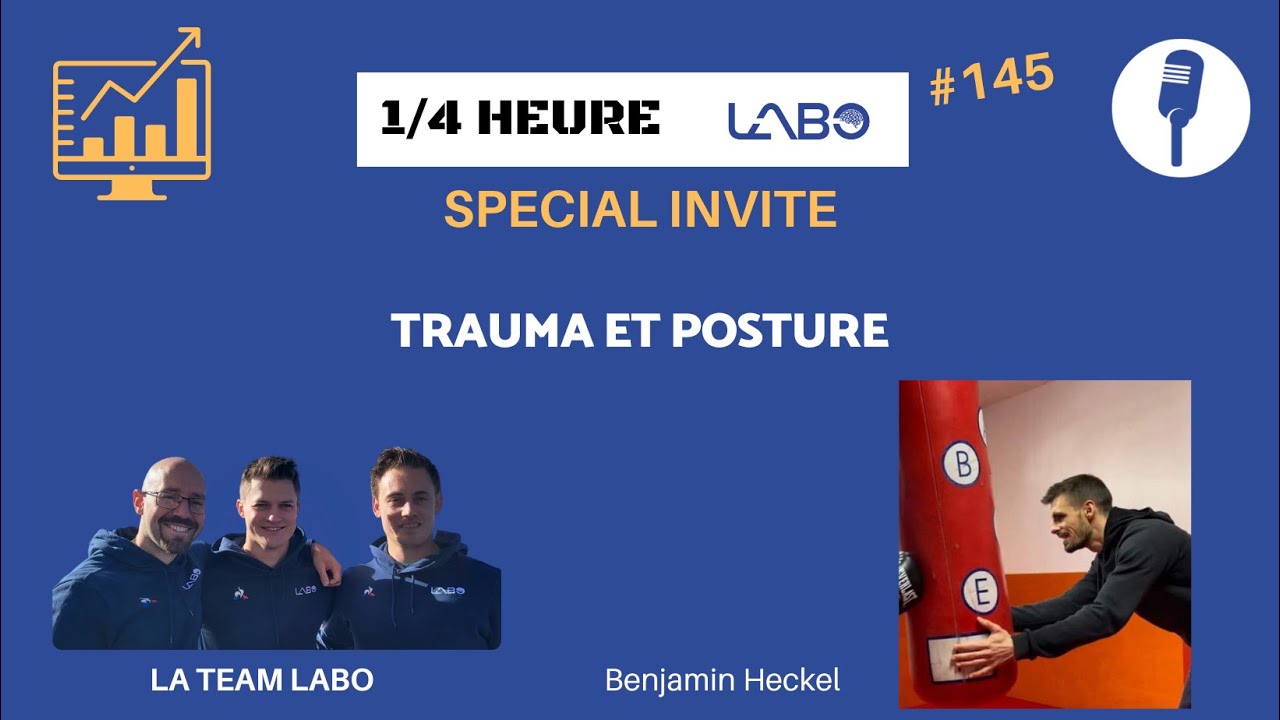
1/4 H Neuro #145 - Trauma and Posture with Benjamin Heckel
Discover how trauma and posture interact through the experience of Benjamin Heckel, a former police officer who helps victims of violence.
The RNP training space, free for life
Get access to RNP training, no strings attached.
Introduction
Hello and welcome to this new episode of Cardor Neuro. We continue our exploration of themes related to trauma and posture. Today, we are pleased to welcome Benjamin Heckel, a former police officer who has dedicated his life to helping victims of violence. In this episode, he will share his journey and expertise on managing stress and trauma.
Introducing Benjamin Heckel
Benjamin, welcome back and thank you for being with us. For those who don’t know you yet, could you introduce yourself?
Of course. I spent 17 years in the police force, mainly in intervention units. Recently, I left the institution to focus on my association, where I help trauma victims, especially women who are victims of domestic violence. I use self-defense workshops combined with mental preparation tools to teach them how to manage their stress.
Reactions to Stress
In this episode, we will discuss three main areas. The first concerns our reaction to violent stress, particularly in intervention situations.
Intervention Experience
In 2016, I experienced a very intense intervention. We had to apprehend an individual threatening us with a shotgun. During the assault, he fired at our unit, and I was injured by a bullet fragment. It was a moment of extreme stress where my mind started to operate in 'tunnel' mode, which allowed me to react instinctively thanks to my training.
Emotional Impact Post-Intervention
After such an intense intervention, what was your emotional state?
Initially, I was in a state of excitement, probably due to adrenaline. But the next day, I realized the extent of the situation. It triggered a kind of waves of emotions, ranging from excitement to deep reflection on my life and safety.
Post-Traumatic Stress
It’s interesting to note that post-traumatic stress can vary from person to person. Some react strongly, while others manage to cope more easily. During debriefings, we noticed that everyone experienced the situation differently.
Helping Victims of Domestic Violence
In parallel, you have set up workshops for women victims of domestic violence. Can you tell us about your approach?
During the workshops, it is crucial to establish a climate of trust. Women come in with apprehension, often linked to their past experiences with law enforcement. My role is to help them release their emotions and rebuild their self-esteem.
The Challenges of Reconstruction
Reconstruction is a long and complex process. Participants must not only learn self-defense techniques but also work on their emotions and confidence. I use a holistic approach, combining boxing, relaxation, and emotional management tools to help these women regain their personal power.
Conclusion
Thank you, Benjamin, for sharing this enriching experience. If our listeners want to learn more about you and your work, how can they contact you?
They can find me on social media under the name of my association "Matit Sport," or email me directly. Thank you all for listening to this episode!
More episodes
The same take on movement, from three other angles of the 1/4h Neuro.
Podcast 1/4h Neuro
Decoding the Asymmetrical Tonic Neck Reflex - ATNR
Is your child getting tired while writing? Discover how an archaic reflex, the ATNR, can disrupt coordination and learning into adulthood.
Read the article Podcast 1/4h NeuroBrain Performance Is Not About Strength, But Balance
Exhausted but unable to disconnect? Discover how to restore your brain's balance to regain focus and mental energy.
Read the article Podcast 1/4h Neuro1/4h LabO #231 - Why Does Movement Think Before Us?
Discover how perception, not force, is the key to movement. Dive into the paradox of the first step and revolutionize your understanding of the body.
Read the articleReady to read the loop before the movement?
The RNP system is meant to be read, targeted and tested from your next assessment. Start with the member space, for free.