Podcast 1/4h Neuro
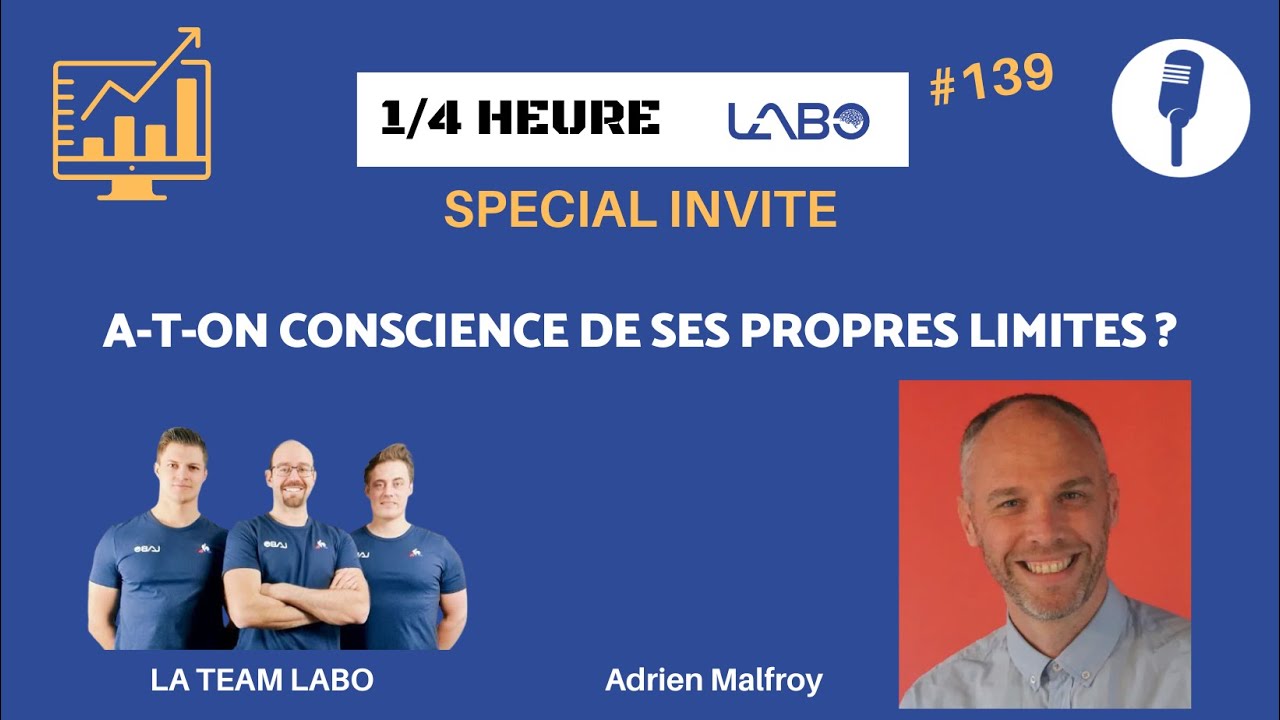
1/4 H Neuro #139 - Are We Aware of Our Own Limits with Adrien Malfroy
Explore archaic reflexes with Adrien Malfroy and discover how they influence our awareness of personal limits and emotional management.
The RNP training space, free for life
Get access to RNP training, no strings attached.
Introduction
Hello everyone and welcome to this new episode of 1/4 H Neuro, a show dedicated to exploring the mysteries of our brain and body. Today, our guest, Adrien Malfroy, a trained osteopath and specialist in archaic reflexes, invites us to reflect on a fundamental question: are we truly aware of our own limits?
With thirteen years of experience in osteopathy and over five years of practice in archaic reflexes, Adrien will enlighten us on how these reflexes, deeply rooted in our brainstem, influence our cognition, posture, sleep, digestion, and most importantly, our emotions. Far from being mere physical reactions, they are essential tools for understanding our responses to danger, overwhelm, and our ability to embrace what is good for us. Together, we will explore how awareness and work on these reflexes can help us redefine our internal and external limits, thereby transforming our perception of the world and our way of living.
What Draws You to Archaic Reflexes?
My interest in archaic reflexes was sparked by a suggestion from my sister, who saw a clear connection to my work as an osteopath. Initially, I was skeptical, but after delving into the subject, I quickly became captivated by how complementary this approach is to osteopathy. It felt like I had opened a new toolbox that transcended my practice and allowed me to feel more complete in the support I can provide to my patients. These reflexes, residing in the brainstem, do not only manage emotional responses or posture; they also affect cognition, sleep, digestion, and all autonomic functions.
Awareness of Our Own Limits
The central question we address is that of awareness of our own limits. Are we aware of our intrinsic limits, linked to the very existence of our bodies and our identity? Or is it the difficulty in defining these limits that constitutes the real challenge? We are not limitless beings; our abilities to communicate, defend ourselves, and take our place are all subject to constraints that are unique to us. The reflection revolves around discovering our yet unexplored abilities and how we interact with our environment.
The Falling Reflex: Protection and Acceptance
We particularly focused on the falling reflex, often perceived as a mere physical protection. This reflex, crucial for avoiding injuries, is actually dual in nature. It manifests through the ability to defend against dangers, but also through the capacity to embrace what is good for oneself. Working on this reflex allows for profound transformation, requiring active awareness from the patient. In practice, this translates into reclaiming past situations where defense was impossible, enabling the expression of repressed emotions and strengthening the determination not to tolerate what is unacceptable.
Concrete Example of Application and Determination
I remember a young patient in the fifth grade, a very empathetic and sensitive child, who was experiencing a difficult school situation. He felt helpless in the face of a bullied friend and guilty for not having been able to defend him. By working on the falling reflex, we explored his ability to resist not through violence, but through determination. The exercise involved feeling how, with just a touch of his hand, he could express an inner strength, a capacity to say no. His eyes lit up with understanding: he realized he possessed untapped resources to defend himself and protect others. It is not violence that is at play, but the determination to set his limits and not tolerate an undesirable situation.
Defending One's Space: Managing Overwhelm
The falling reflex is closely tied to the ability to define one's personal space. It involves knowing how to distance oneself from what is not allowed, while welcoming what is beneficial. This notion becomes even more delicate when associated with reflexes such as paralysis by fear. Some may feel overwhelmed by everything happening in their lives, as if they have nothing to defend, with undefined limits. Others, sometimes within the autistic spectrum, may not perceive these limits, allowing their environment to intrude without filter, lacking that innate capacity to push back.
Shock and Reconstruction in Traumatic Situations
In more painful contexts, such as issues related to abuse, shock is a common reaction and often a survival strategy, especially for a child who lacks the physical means to defend themselves. Unfortunately, this shock can lead to guilt in victims years later. My role is to help these individuals reclaim their past, not to change it, but to change how it is perceived. Emotion, by its etymology, is linked to movement. It is about understanding what movement could not be made at the time and reconstructing it today. Anger, sadness, and fear are legitimate emotions. It is crucial not to turn them into violence, but to identify them to restore the capacity to push back, to defend oneself, without fear taking over. Shock is a first step of analysis that, once revisited, can lead to an action of submission, constructive attack, or flight.
Welcoming What is Good for Oneself: The Second Phase of the Falling Reflex
Beyond the capacity to push back, it is essential to learn to welcome what is good for oneself. This involves creating a safe and comforting environment where one can thrive and love oneself. In osteopathy, the quality of touch, the way the patient welcomes physical contact, are valuable indicators of their ability to receive and allow. Patients' stories often unfold over time, as emotional resistances dissipate. Manual therapists, whether osteopaths or physiotherapists, play a key role in this process, unlocking unconscious emotional aspects, even if the patient initially comes for physical pain.
Emotions and Awareness: What the Body Reveals
Although patients rarely come for emotional issues, a significant part of these problems lies in assessments. Often, they are not even aware of the impact their emotions have on their health. For me, it is delicate to speak of unconsciousness, as a part of our being knows, even if it is not fully accessible. The hippocampus, for example, the organ of memory, remembers everything, from traumas to positive experiences. These memories, whether conscious or not, create reaction patterns that are not always wise. For instance, a past association between anger and violence can hinder the healthy expression of this emotion in adulthood. Furthermore, the example set by parents, more than their words, shapes our perception and reactions. Evolution is possible and involves redefining these limits, not in the sense of restriction, but as a secure framework in which one can thrive.
Discovering and Appreciating One's Limits to Live Differently
The essence is not to delineate oneself, but to discover one's limits to better appreciate them. Just as a child needs limits to grow, we need to recognize ours to feel secure and capable of welcoming or defending ourselves. It is an opportunity to live differently, to perceive life in a new way, through a reclamation of our reflex reactions. The body, with its complexity and memory, is a valuable guide for this exploration.
Adrien Malfroy also shares the existence of a podcast titled "Le Te Time d'Adrien et Sophie," where he addresses these emotional questions through conversations with patients. Finally, he prefers to ask questions rather than give advice, believing that the right question at the right moment can open unexpected paths of reflection and evolution for everyone. To find Adrien, you can search for him on Instagram under the name @malfroyosteopathe.
More episodes
The same take on movement, from three other angles of the 1/4h Neuro.
Podcast 1/4h Neuro
Decoding the Asymmetrical Tonic Neck Reflex - ATNR
Is your child getting tired while writing? Discover how an archaic reflex, the ATNR, can disrupt coordination and learning into adulthood.
Read the article Podcast 1/4h NeuroBrain Performance Is Not About Strength, But Balance
Exhausted but unable to disconnect? Discover how to restore your brain's balance to regain focus and mental energy.
Read the article Podcast 1/4h Neuro1/4h LabO #231 - Why Does Movement Think Before Us?
Discover how perception, not force, is the key to movement. Dive into the paradox of the first step and revolutionize your understanding of the body.
Read the articleReady to read the loop before the movement?
The RNP system is meant to be read, targeted and tested from your next assessment. Start with the member space, for free.