Hands Up!
Discover why our hands deserve as much attention as our feet! Amazing performance partners, they house 3000 nerve endings and are essential to our mobility.
The RNP training space, free for life
Get access to RNP training, no strings attached.
We often talk about feet, and we frequently think about feet in performance.
But why do we pay less attention to our hands?
The Hand
In a previous article, we saw that the foot contains 7000 nerve endings, but did you know that the hand has around 3000?
The hand is also made up of 27 bones and approximately 30 muscles.
Add to the equation that the hand, like the foot, is one of the first areas to activate in infants when they are born.
https://www.instagram.com/reel/C29flmMa3q
The hand is also present in 4 myofascial chains described by Myers (Elsevier Editions).
Each arm consists of a superficial anterior and posterior chain and a deep anterior and posterior chain.
We can therefore understand that weakness in the hand can lead to weaknesses throughout this chain (shoulder, neck, and torso).

We cannot ignore that the hand also needs specific work just like the feet.
What Tests?
I present to you 3 different tests:
Test 1: Test the palmar grasp reflex. There are several ways to test it, and I will present one below.
Test 2: The piano test. This involves closing each finger on the thumb, one after the other, starting from the index finger to the little finger and back to the index.
This test checks both the ability to integrate the palmar reflex and the precision and fluidity of execution.
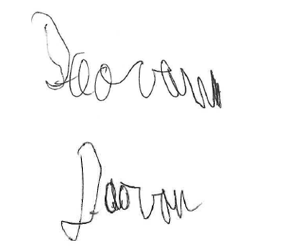
Test 3: Write your name.This is a test I often do with children. When they write their name, I can check if the writing is neat and if the pen is held correctly.
The Hand in Sports Practice
A palmar grasp reflex that hasn't been integrated as it should could lead to several issues, especially in sports:
- individuals who don't lock their bars because the thumb mechanism isn't in place
- in combat sports, individuals who clench their fists with the thumb inside the fist
- in ball sports, a loose grip on the ball.
- someone who will quickly lose their grip (cramp, weak grip endurance).
- when doing crawling movements, the hands are not oriented forward but to the side.
You can perform a grip test to check the strength of your athletes. Moreover, this grip test is easy to implement and will allow you to easily correlate the improvements of your athletes.
Final Word
There are several capacities to assess in the hand: in terms of archaic reflexes, strength, and sensory (proprioception).
Working on these components will greatly enhance everything related to the hand.
Adrien
Read next
LabO Notebook
Mastering the Art of Motor Learning: The Revolutionary Approach of the OPTIMAL Theory
Discover how the OPTIMAL theory transforms motor learning by combining intrinsic motivation and attention to boost your sports performance and optimize your movements.
Read the article LabO NotebookNeuro and Stress: A Journey into the Heart of Emotional Responses
Discover how the brain processes stress and regulates our emotions. Dive into essential neural mechanisms, from the reflex to the amygdala, to better understand our reactions to danger.
Read the article LabO NotebookUnderstanding Primitive Reflexes in 5 Minutes
Discover primitive reflexes, these archaic movements that spark debate and curiosity. In under 5 minutes, unveil their functioning and form your own opinion!
Read the articleReady to read the loop before the movement?
The RNP system is meant to be read, targeted and tested from your next assessment. Start with the member space, for free.